HelixGuide is an AI assistant for genomic testing. Lightrains built it for a B2B genomic testing and support lab whose specialists were spending more of their day explaining finished reports than working on cases that needed expert judgment.
Patients, clinicians and partner teams ask HelixGuide about a report in plain language. The answer comes from that report and the lab’s approved content, and it links back to the pages it used.
The lab is anonymised. The longer write-up, including how the lab measured the rollout, is in AI Assistant for Genomic Reports: Scaling Lab Support.
The problem
Every report the lab issued started a chain of follow-up questions across email, calls, portals and tickets. Specialists explained the same report sections over and over, to users with very different levels of genomic literacy.
The usual fixes did not hold up:
- Static FAQs could not tell one report format or test type from another.
- A general-purpose chatbot could write a fluent answer that missed the finding that mattered.
- Adding specialists for every new partner account did not scale.
The lab needed a first line of support that worked from the user’s own report, used only approved language, and knew when to hand a question to a person.
The report view
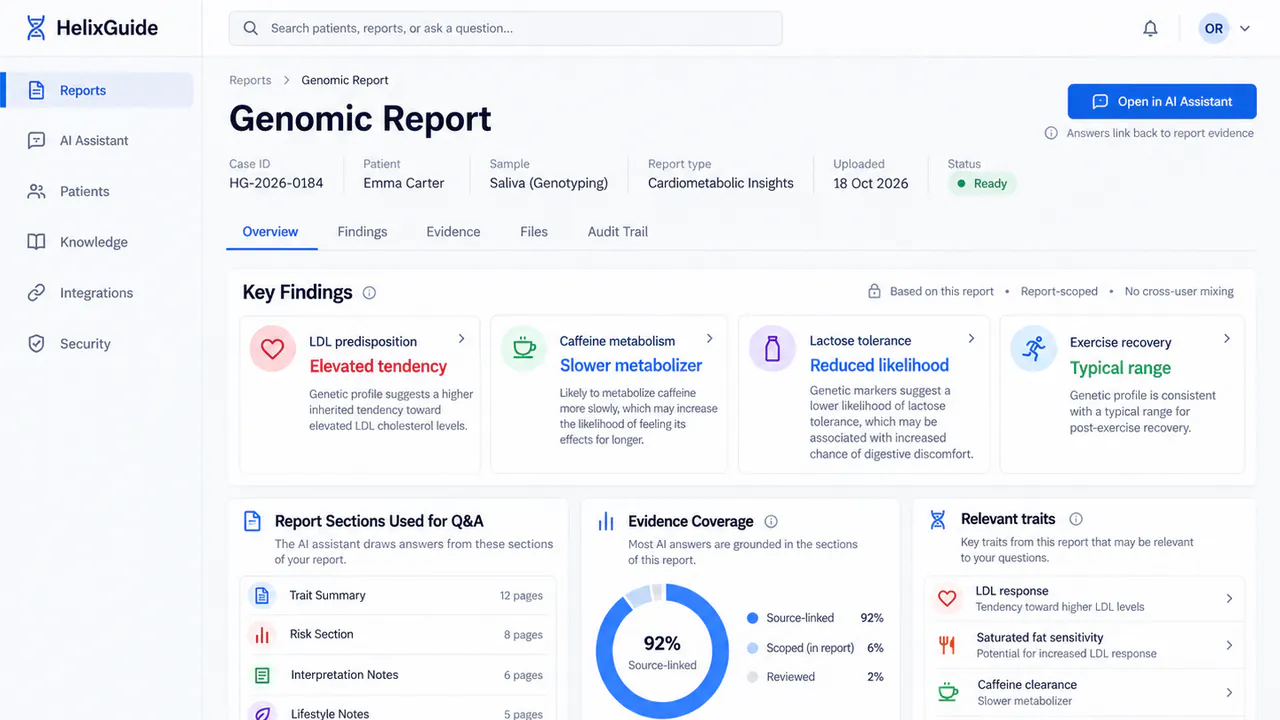
Each case opens on the report. Key findings carry a plain-language label, such as “Elevated tendency” for LDL predisposition. The page lists the report sections the assistant is allowed to draw on and the traits most likely to come up in questions.
A plain-language summary sits at the bottom, next to a notice that the report describes genetic tendencies, not a diagnosis.
The assistant
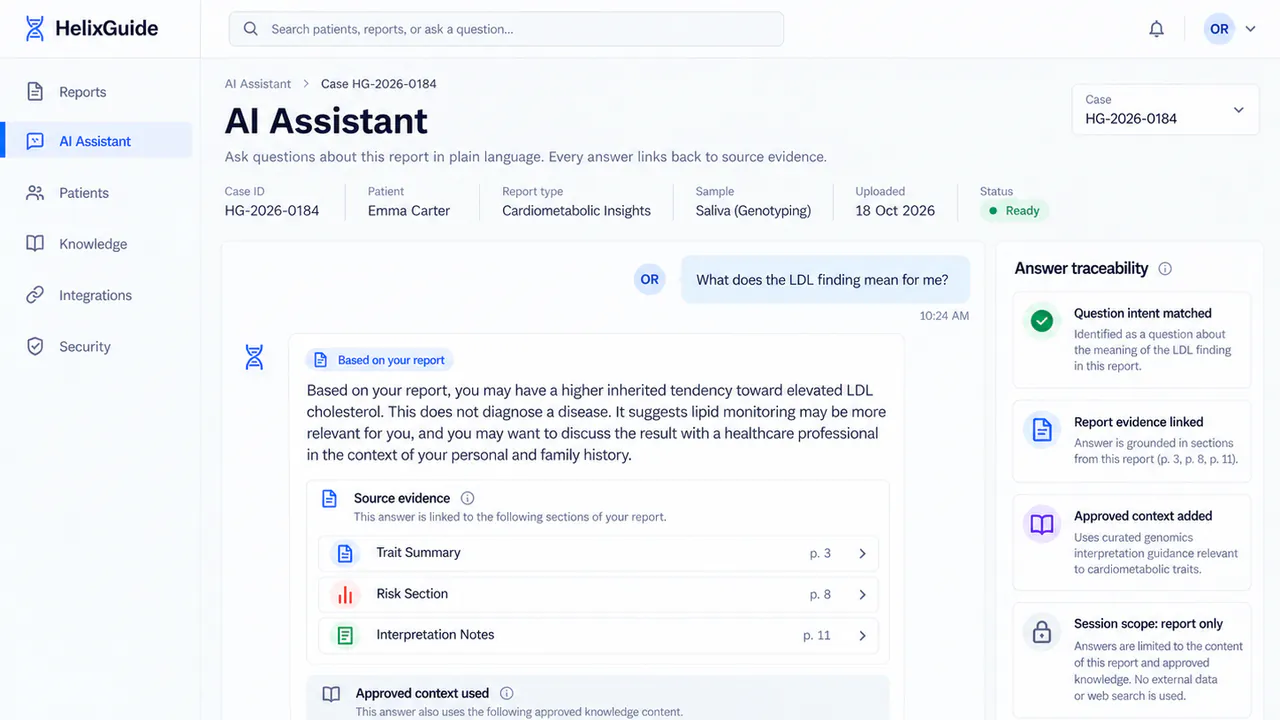
Users ask about the report in their own words, for example “What does the LDL finding mean for me?”. Each answer shows:
- The report sections it came from, with page numbers
- The approved knowledge content it used
- A reminder that the assistant explains report content and does not diagnose
A traceability panel beside the chat records how the answer was built: the matched question intent, the linked report evidence, the approved context added and the session scope. A session is limited to one report and the lab’s approved knowledge. There is no web search and no memory across users.
How an answer is built
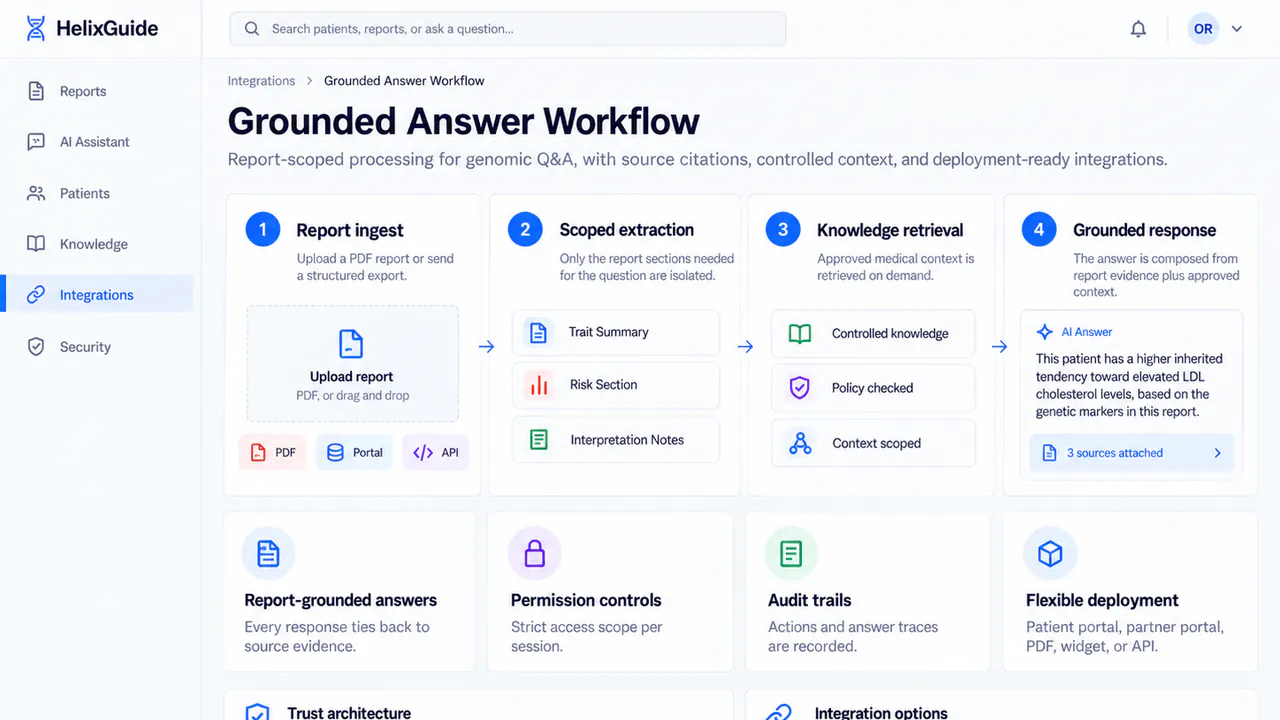
HelixGuide uses retrieval-augmented generation (RAG), narrowed to a single report:
- Report ingest. A PDF report is uploaded, or a structured export arrives from the lab portal or API.
- Scoped extraction. Only the report sections needed for the question are pulled out, such as the trait summary, risk section or interpretation notes.
- Knowledge retrieval. Approved medical context is retrieved on demand and checked against policy.
- Grounded response. The answer is composed from report evidence plus approved context, with the sources attached.
Questions that need clinical judgment, touch sensitive topics or fail a confidence check go to a specialist, with the conversation attached so nobody has to start over.
Privacy and access
Genomic data needs tighter handling than a typical support transcript. HelixGuide is built around these controls:
- Each report is processed in isolation, with no cross-user mixing
- Encryption in transit and at rest
- Consent-aware workflows that follow the patient’s consent and access policies
- Permission scope set per session
- Audit trails for actions and answer traces
- Configurable data retention
Where it runs
The same assistant deploys wherever the lab’s users already work:
- Patient portal
- Partner portal for care teams
- AI-generated insights inside downloadable PDF reports
- Embeddable widget or REST API
Outcome
Routine report questions now get an answer at the point of confusion instead of waiting in a ticket queue. Specialists spend less time on repeat explanations and more on escalations and partner conversations. Explanations are consistent across channels because they all come from the same report and approved content, and the lab can take on new partners without hiring a specialist for each one.
Lightrains offers this as a service for genomic labs and health platforms. See AI assistant for genomic reports for scope, integrations and pilot options.