Introduction
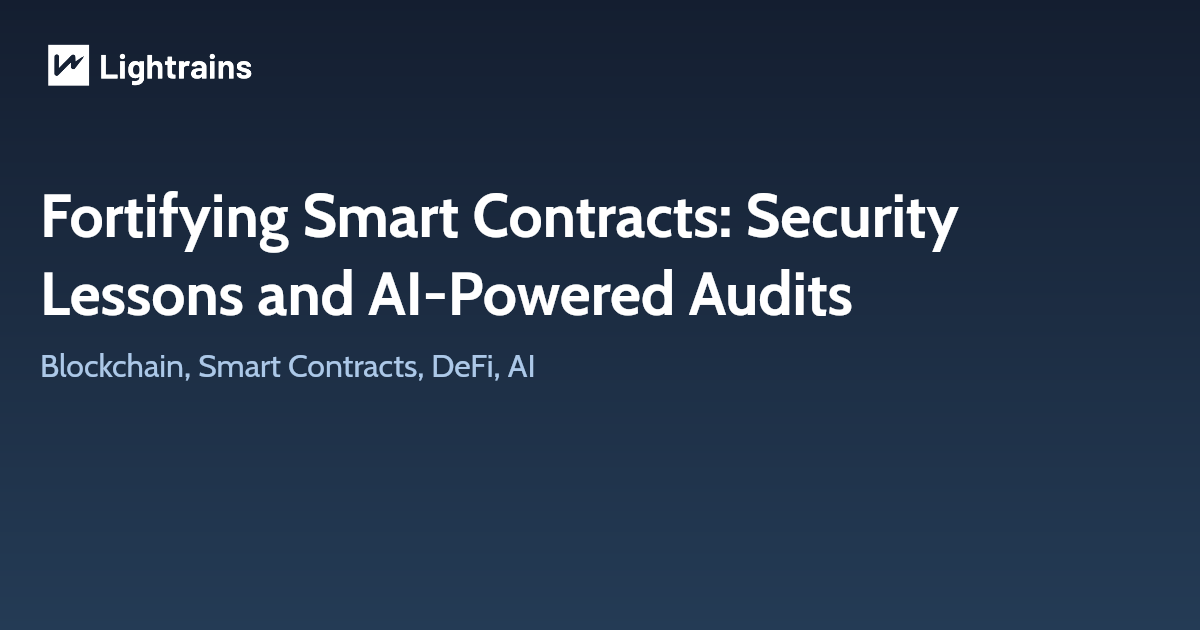
Decentralised finance promises open, permissionless innovation, but poor security still undermines trust. October 2025 alone saw nine exploits across DeFi and CeFi platforms, with losses totalling $38.63 million. Only $480 000 was recovered, and cumulative losses this year exceed $8.8 billion. The most severe incident involved a compromised private key at Hyperliquid, leading to a $21 million theft. These numbers are sobering, yet they reflect a trend: while the total loss declined 67% compared with October 2024, attackers continue to exploit access controls, misconfigured oracles and untested smart contracts. At the same time, global adoption of digital assets is soaring. TRM Labs’ 2025 report shows that India, the US, Pakistan, the Philippines and Brazil lead in crypto adoption, and stablecoins now account for 30% of on‑chain transaction volume With over $4 trillion in stablecoin transactions recorded by August 2025, the stakes are higher than ever. This article examines the state of DeFi security, explores how AI can aid audits and offers practical steps to protect your smart contracts.
DeFi security today: trends and challenges
The October 2025 DeFi Rekt report details how a handful of weaknesses cause outsized losses. Access control failures were responsible for 46% of October’s damages, illustrating how compromised administrator keys or poor wallet hygiene can wreak havoc. Oracle manipulation remains another recurring attack vector; Typus Finance lost $3.44 million when attackers exploited mispriced price feeds. Flashloan‑enabled exploits, logic errors and rugpulls continue to target decentralized exchanges and yield aggregators. The report underscores that no blockchain is immune Ethereum, Arbitrum and new ZK‑rollup chains like Linea all suffered incidents】.
Regulators are paying attention. The Financial Stability Board warns that gaps in global cryptocurrency regulation leave investors and financial systems vulnerable. Tokenization of real‑world assets is creating tension between crypto firms and banks, with regulators balancing innovation against systemic risk. Switzerland has responded by launching a consultation on stablecoin issuance and crypto institutions that would require full backing and segregation of client assets】. For project teams, these developments signal that technical security must be coupled with governance and compliance. If you deploy a smart contract without proper audits, you not only risk losing funds but may also face regulatory scrutiny.
AI‑powered audits: research insights
Traditional static analysis and symbolic execution tools remain essential for smart‑contract security, but they have limitations. A recent study highlighted by Help Net Security shows that large language models can detect vulnerabilities more effectively when they work together. Researchers at Georgia Tech built LLMBugScanner, a framework that fine tunes multiple LLMs on labelled Solidity code and combines their predictions using a voting system. On a benchmark of 108 real‑world vulnerable contracts, the ensemble achieved about 60% top‑five detection accuracy, roughly 19 percentage points higher than the best individual model. The approach reduces false positives and improves coverage across categories like integer overflow, access control errors and logic flaws. The researchers caution that hallucinations and rare bug types remain challenging, so human expertise is still required, but the findings suggest that AI can augment auditors by ranking potential issues and highlighting uncommon patterns.
For builders, this means you shouldn’t rely solely on one tool or model. Combine static analysis, symbolic execution and AI‑assisted scanning. Use AI to triage issues and direct human auditors to the most critical code paths. Fine tune models on your domain if you deploy yield aggregators, train models on similar contracts. And don’t forget to monitor for access control weaknesses outside the contract: the Hyperliquid hack shows that private key management and multi‑factor authentication are as important as code quality.
Best practices for secure smart contracts
Security is a process, not a one‑time event. Implement these practices to reduce risk:
- Perform rigorous audits: Before deploying, conduct multiple audits using different tools and teams. Include AI‑assisted analysis, manual code review and formal verification where feasible. Address findings promptly.
- Use time‑locked administration: Replace single admin keys with multisignature wallets and time‑locked functions. This limits the damage if a key is compromised and provides time to respond to malicious proposals.
- Mitigate oracle risk: Source prices from multiple feeds and implement circuit breakers. Resist using only a single data provider. For yield aggregators, ensure that off‑chain data is redundant and validated.
- Adopt secure coding standards: Follow the OpenZeppelin library and the Solidity compiler’s latest recommendations. Avoid outdated patterns like unguarded
delegatecall. Test using fuzzing frameworks. - Implement continuous monitoring: Deploy real‑time anomaly detection for your contracts and wallets. Tools like OpenZeppelin Defender and Chainlink keepers can notify you of suspicious transactions, while AI agents can analyse unusual patterns in transaction flows.
- Stay compliant: Keep abreast of evolving regulations. Switzerland’s proposed licensing for stablecoins underscores that compliance can vary by jurisdiction. Work with legal advisors and incorporate compliance checks into your deployment pipeline.
How Lightrains can help
Securing your smart contracts requires expertise that spans blockchain, cloud infrastructure and machine learning. Lightrains has audited and deployed smart contracts across Ethereum, Solana and layer‑2 networks. Our blockchain consulting and smart‑contract development services combine rigorous code audits with AI‑powered vulnerability detection. We also build NFT marketplaces and tokenization platforms through our NFT marketplace development offering, ensuring that digital assets are secure from minting to marketplace. If you’re exploring DeFi or Web3 initiatives, partner with us for end‑to‑end security and compliance.
Don’t wait for a headline‑grabbing hack to act. Invest in robust security practices, embrace AI‑assisted audits and work with experts to fortify your smart contracts. Contact Lightrains to learn how we can safeguard your next blockchain project.
This article originally appeared on lightrains.com
Leave a comment
To make a comment, please send an e-mail using the button below. Your e-mail address won't be shared and will be deleted from our records after the comment is published. If you don't want your real name to be credited alongside your comment, please specify the name you would like to use. If you would like your name to link to a specific URL, please share that as well. Thank you.
Comment via email


![Cross-Provider AI Brand Visibility Audit [Step-by-Step]](/open-graph/blogs/cross-provider-ai-brand-visibility-audit.png)